
Flightless Films, June 2025
Bears Country: Filming with the Blackmagic Immersive camera for Apple Vision Pro
Camera operator & DP: Charlie · Director: Thom Cotton · Sound: Ryan Windley · Commissioned by TNT Sports
When I was approached about a job that required working with the Blackmagic URSA Immersive camera, I jumped at the chance. New toys have always excited me, and this was no exception.
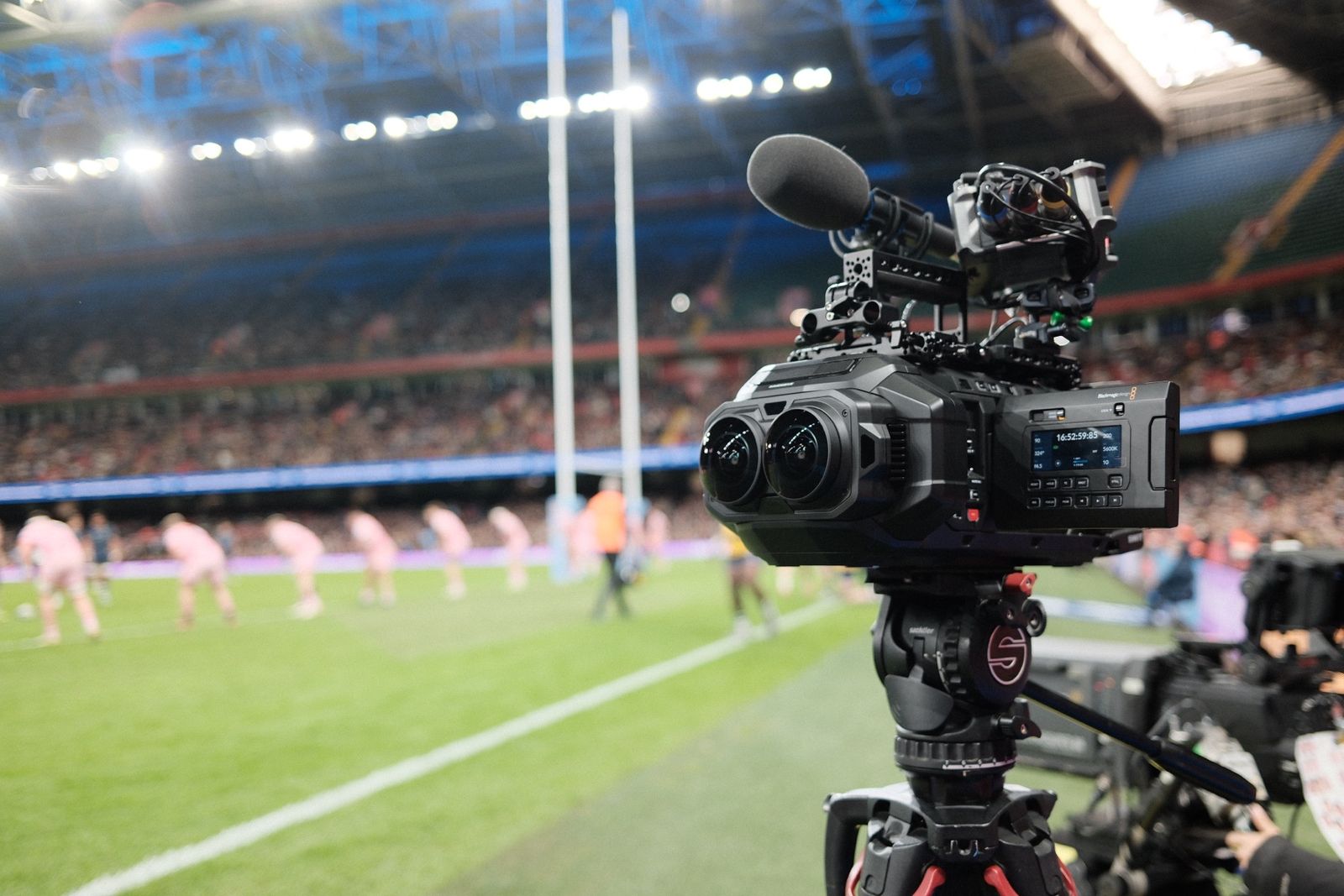
It's a funny camera to get your head around. Two lenses capturing 180 degrees catches so much more than you expect (I know, it sounds obvious, but trust me). Before getting into the actual documentary, we had the chance to film a couple of rugby matches with the camera to get familiar and figure out what worked. Being in the right place at the right time: good. Rain: bad.
The project came through TNT Sports, who commissioned a short documentary following Bristol Bears during a pivotal stretch of their season. Apple were closely involved throughout, actively looking for content for the Apple Vision Pro, and this was the kind of access-driven project they wanted. I was brought in as camera operator and DP, working alongside director Thom Cotton, with sound by Ryan Windley and edit by Dan Brockwell.
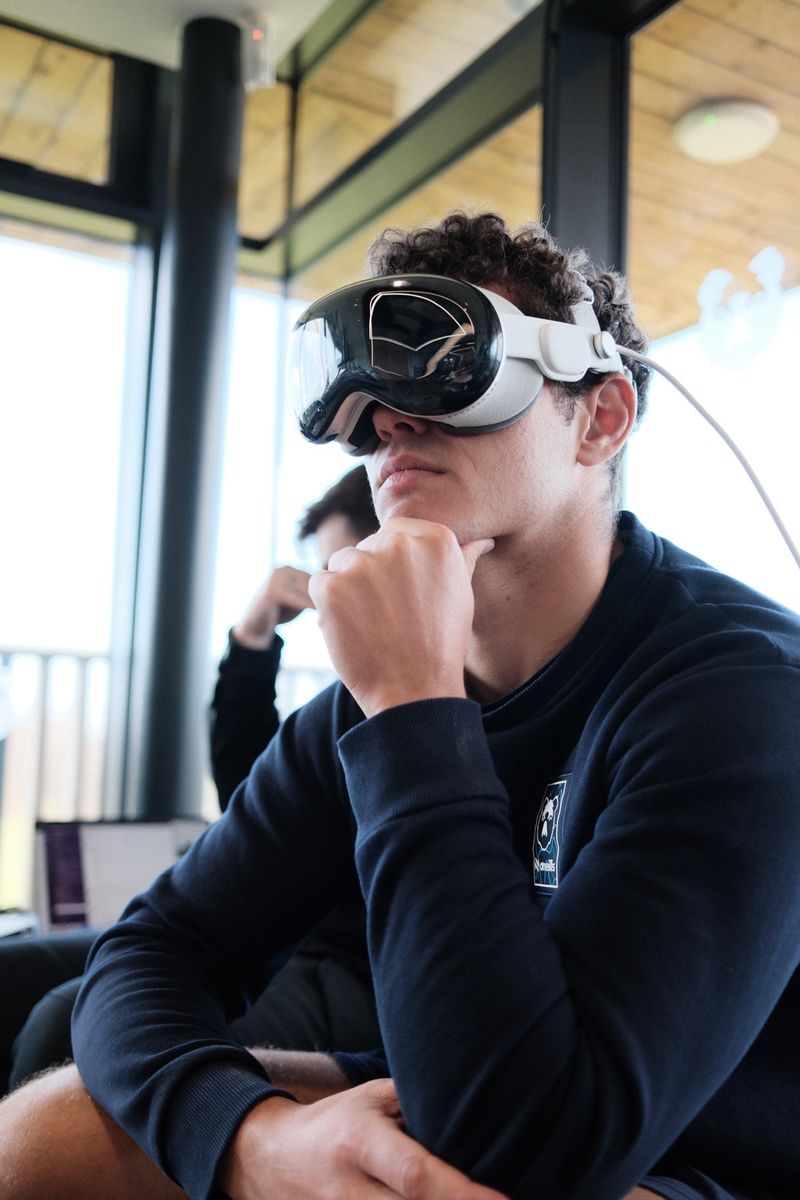
Before we got near a match, we spent a week or two properly embedded at the club: training days, lunches, team meetings. To get the ball rolling, we sat down with anyone at the club who wanted to try on the Apple Vision Pro goggles, to show them what we were actually making and get them invested. It worked.
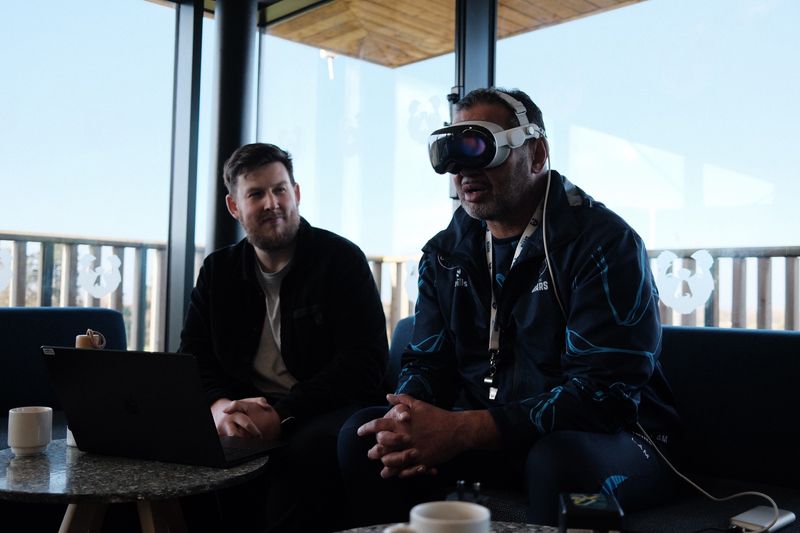
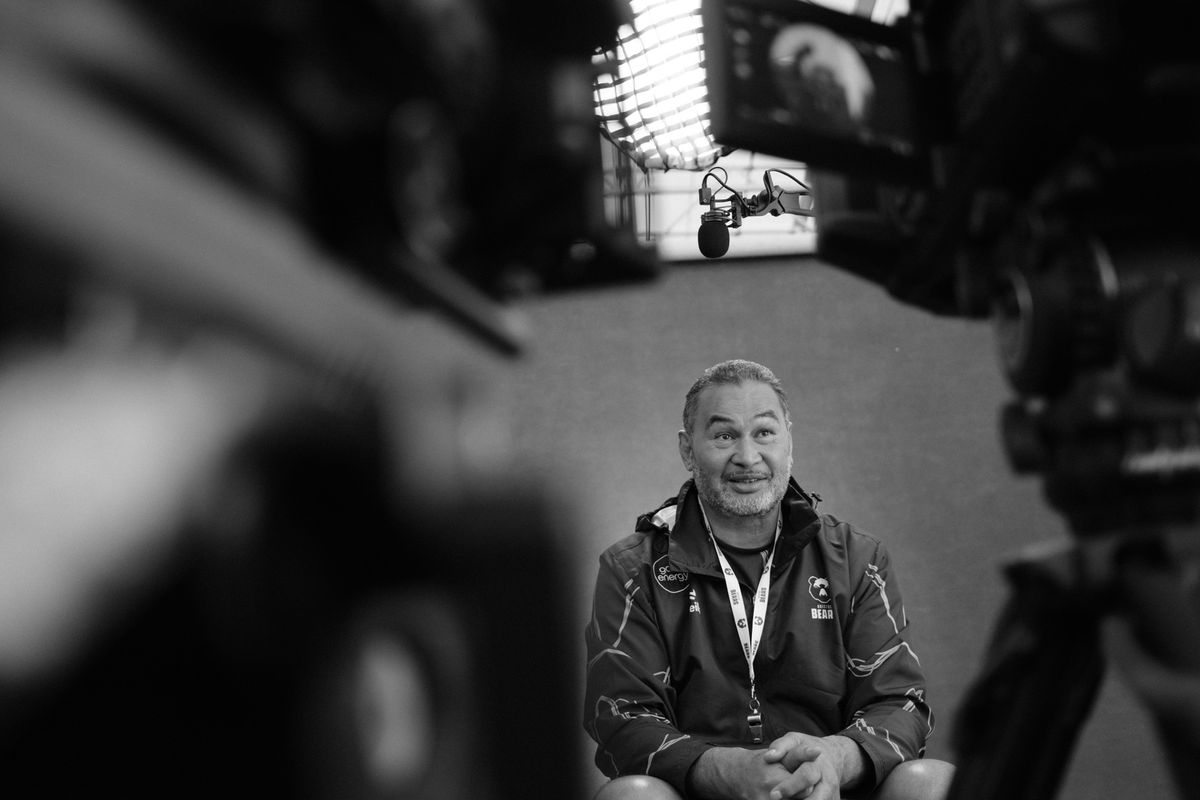
The people who really made it possible were Pat Lam, the head coach, and Will Carpenter, Bristol Bears' Head of Media and Communications. From day one they told us: go anywhere you want, we'll tell you if it's too far. That kind of openness is rare, and they didn't just say it. Pat walked us right into the thick of it, close to the huddles, close to the touchline. You'd hold back out of instinct, but their buy-in meant we could push further than we otherwise would have.
We originally planned to shoot one match, the "Big Day Out," a game held at the Principality Stadium against Harlequins. Four cameras, everything thrown at it. Bristol lost. The neat narrative arc didn't quite work anymore, so we went back for a second match. Instead of building to one climactic game, the story became: can the Bears stay in contention for the playoffs? They were hovering just inside the top four, every result mattering. The second match, back at their home ground with only two cameras this time, produced some of the best material of the whole project.
The first thing to get your head around with the URSA Cine Immersive is that it captures 180 degrees in front of the lens. Everything is in shot: your tripod legs, anyone standing nearby, even the other camera lens.
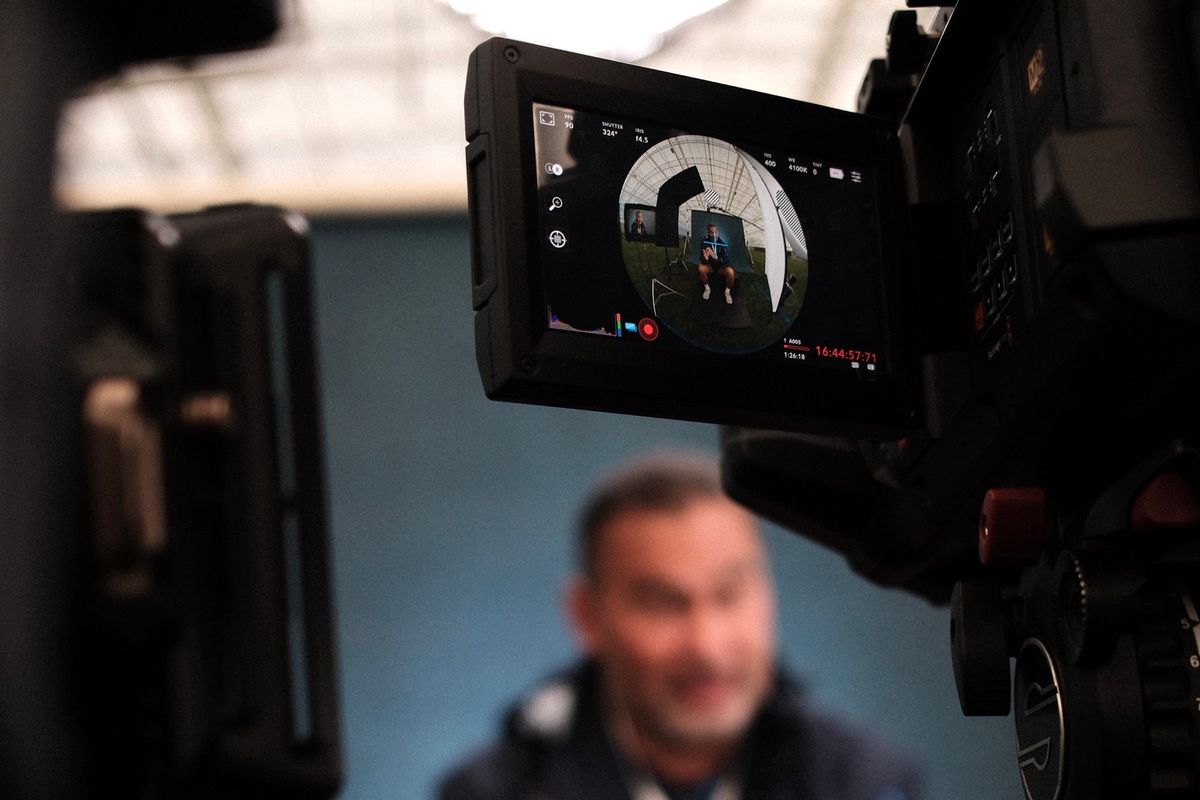
The bigger challenge is movement. Sudden camera movement causes motion sickness in the headset, so you're not pushing, pulling, or whipping around. What you can do is pan slowly, following the action, but only if you commit. If you start panning with a player and they get tackled, you stop. That's the end of your move.
One of the other operators at the Principality had done a formal course on the camera. There's real value in that, but if we'd stuck rigidly to the rulebook we'd have missed half the good stuff. What actually worked was positioning and anticipation. If a scrum was forming near the touchline, you got there fast. If the ball went out, you got behind the lineout. If something happened at the far end of the pitch, you let it go and waited for the next opportunity. You can't chase it. You just have to trust that something will come to you. With the camera capturing dual 8K frames at 90 frames per second, it rips through media, so you have to be somewhat selective with what you film.
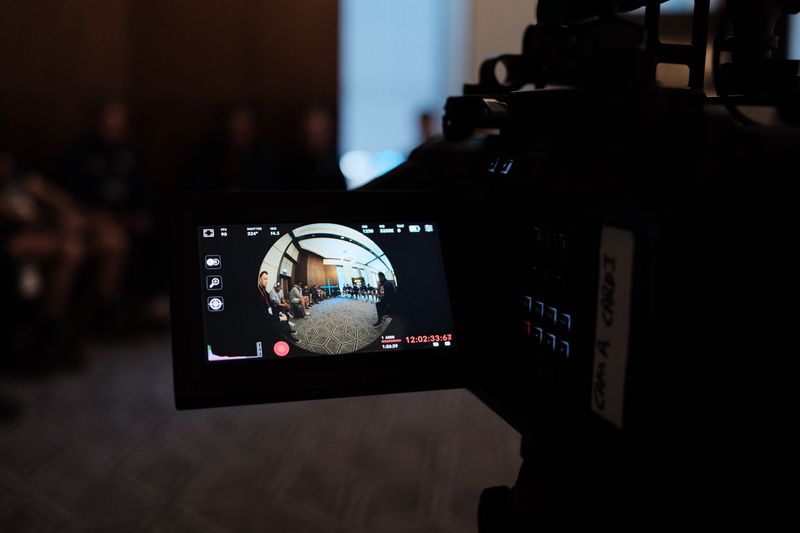
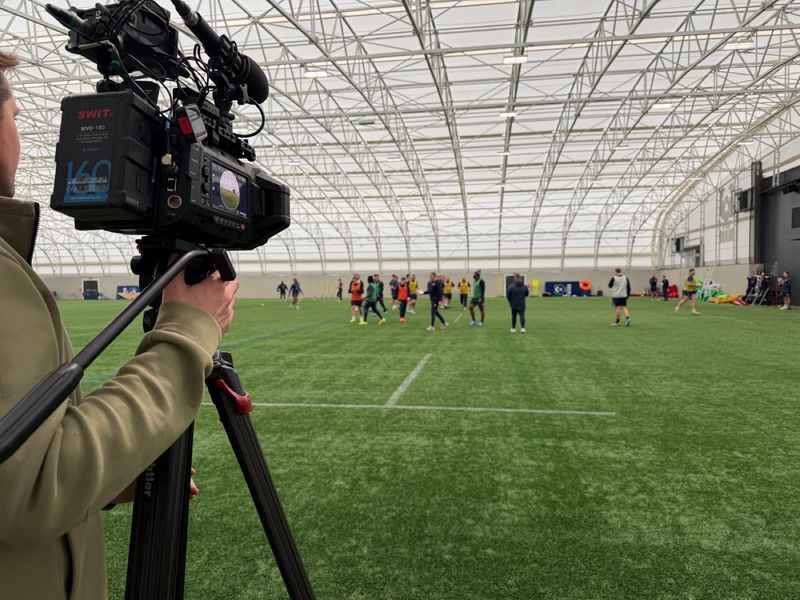
Camera height also matters more than you'd expect. There were shots where I was maybe twenty centimetres too low, and while most people watching probably wouldn't notice, I could see it when playing back in the headset. Immersive content is unforgiving that way, because the viewer is inside the frame with nowhere else to look.
The first edit tried to tell the whole match chronologically. Apple came back with a note that turned out to be exactly right: you don't need to see the match play out, just put in the best shots and let the narration carry the story. Once the edit team applied that, the pieces started to fall into place. Immersive content isn't about completeness, it's about presence. A handful of genuinely immersive moments beats twenty minutes of coverage every time.
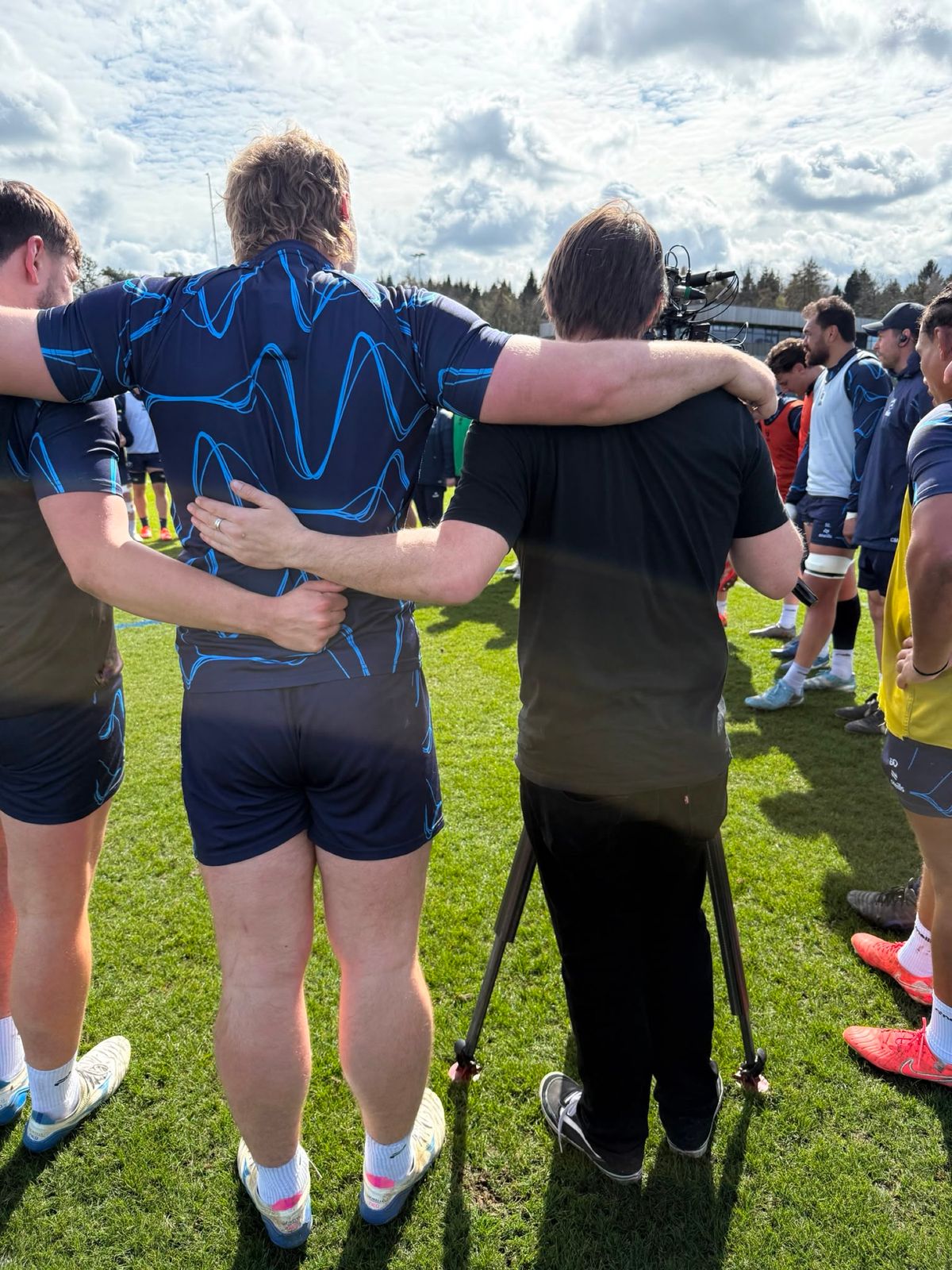
By the time we wrapped, I'd gone from not really knowing how to hold the thing to having a genuine feel for it. That's the bit I keep coming back to. With a camera like this, the technical side only gets you so far. The rest comes from being switched on, anticipating what's about to happen, and trusting your instinct over the rulebook.
None of it would have worked without the access Pat and Will gave us either. You can have the best camera in the world and still come away with nothing if people don't let you in. We got incredibly lucky there.
I watched the Real Madrid documentary Apple put out for the Vision Pro recently, and it's a different world. Steadicam rigs, somewhere up to 30 cameras, a budget that lets them try things we never had the option of. The variation and craft in it is genuinely brilliant, and it's easy to watch something like that and feel a bit deflated about your own work in comparison.
But we were a tiny team most of the time working with only one camera and whatever access we could earn on the ground. Given that, I'm genuinely proud of what we managed to put together.
It's a strange, fiddly, occasionally frustrating camera to work with. It's also one of the most exciting things I've filmed with in years, and I'd jump at the chance to do it again.
If you're looking for a DP with hands-on experience with the Blackmagic URSA Cine Immersive for Apple Vision Pro content, immersive documentary work, or VR production, get in touch.
More from the shoot